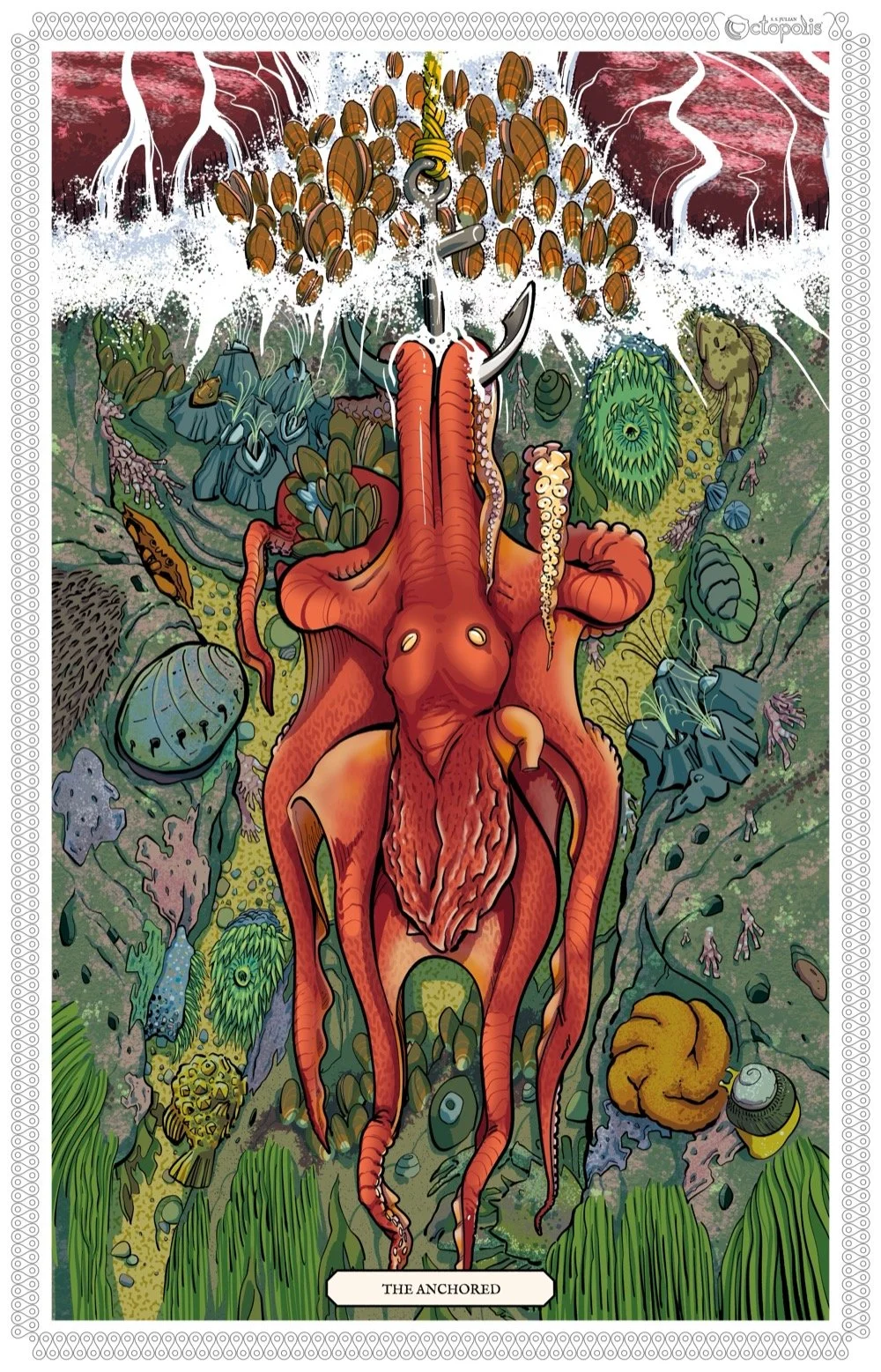
An octopus sits latched to a rocky surface in a tide pool, bearing down under an enormous current. It grips an anchor as its body is buffeted by the force of the water, but its expression is that of serene determination. Alongside the octopus is a variety of oceanic life that lives in rough intertidal zones.
Symbolism of The Hanged Man
The Hanged Man is a card about initiation, sacrifice, and understanding gained through trial. The figure is surrendering to outside forces and in exchange for a kind of mental clarity. Their perspective has changed in achieving epiphany, though their position may not be a comfortable one.
The card engages with other symbolic references of the 'dying god' in our collective unconscious: the crucifixion of Jesus as a sacrifice for the redemption of the collective souls of humankind, and the hanging of Odin on the branches of Yggdrasil in order to see the future.
Le Pendu, Marseilles deck.
The Hanged Man, Smith-Waite deck.
The Hanged Man, Thoth deck.
People often imagine something gruesome when they hear the word but the actual depiction of the card portrays a person hanging by their legs with a rather serene expression on their face. So there's this implication that the person hanging has done so voluntarily, or at least has embraced their fate with a sense of equanimity.
The Anchored in Octopolis
Octopuses don't have the same relationship to 'hanging' as we do. After all, hanging (via vacuum suction) is the main way they grip surfaces, so it's not exactly a difficult trial. So I had to look for other physical metaphors.
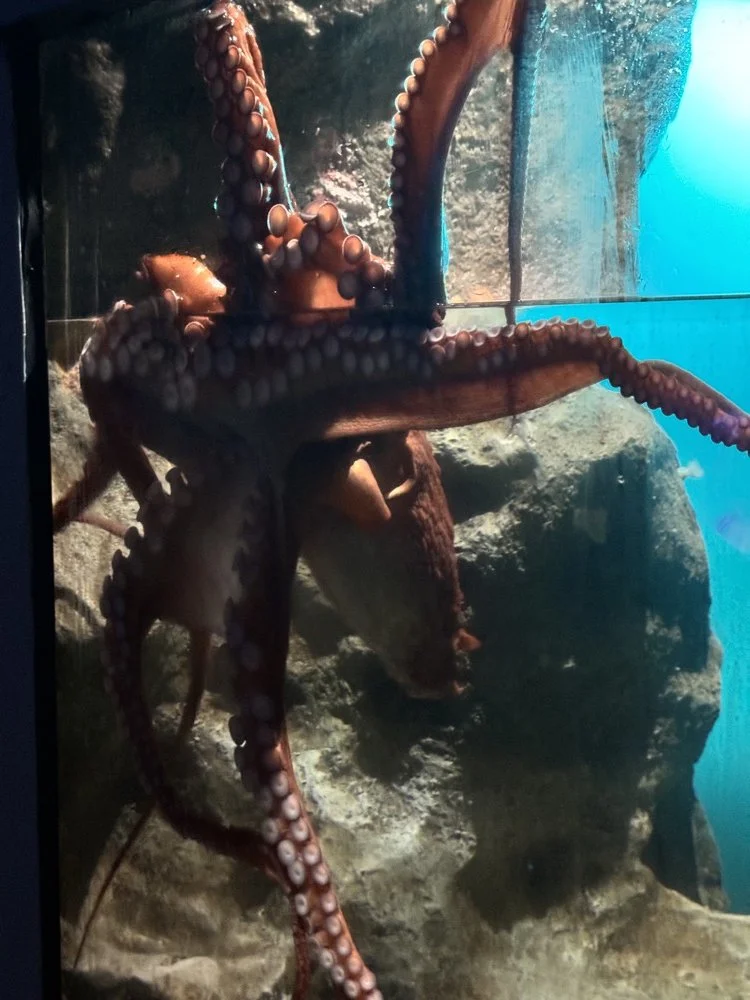
Giant Pacific Octopus at the California Academy of Sciences. Footage by Sam Julian.
Octopuses can be 'hooked', so my first thought was to have an octopus caught on a hook, like a fish. But even being hooked doesn't quite capture the sense of being hanged— when a person is hanged the main force acting on them is gravity is pulling them down. The sense of resisting an opposing force is key to the card's meaning. So while the octopus is hooked, there also needs to be a strong current pulling against them.
This brought to mind the world of tide pools. Tide pools are liminal spaces, coastal areas that spend half their time submerged by water and half their time exposed to air. Water is constantly rushing in and out of crevices in the rocks along the shore, creating harsh currents and crushing waves.
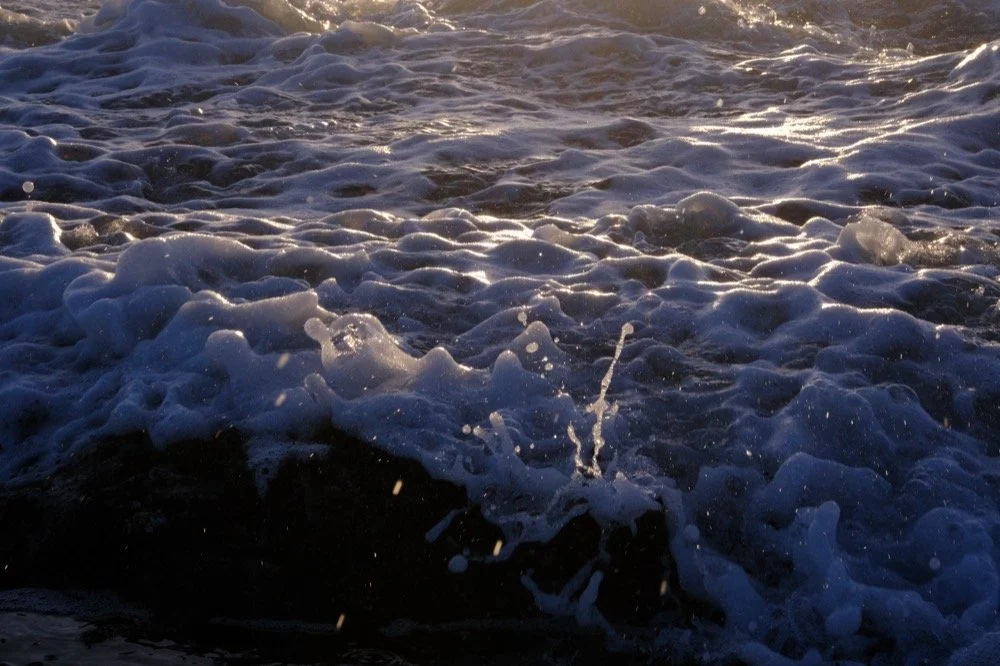
Surf in Pismo Beach. Photo by Sarah Guerrero
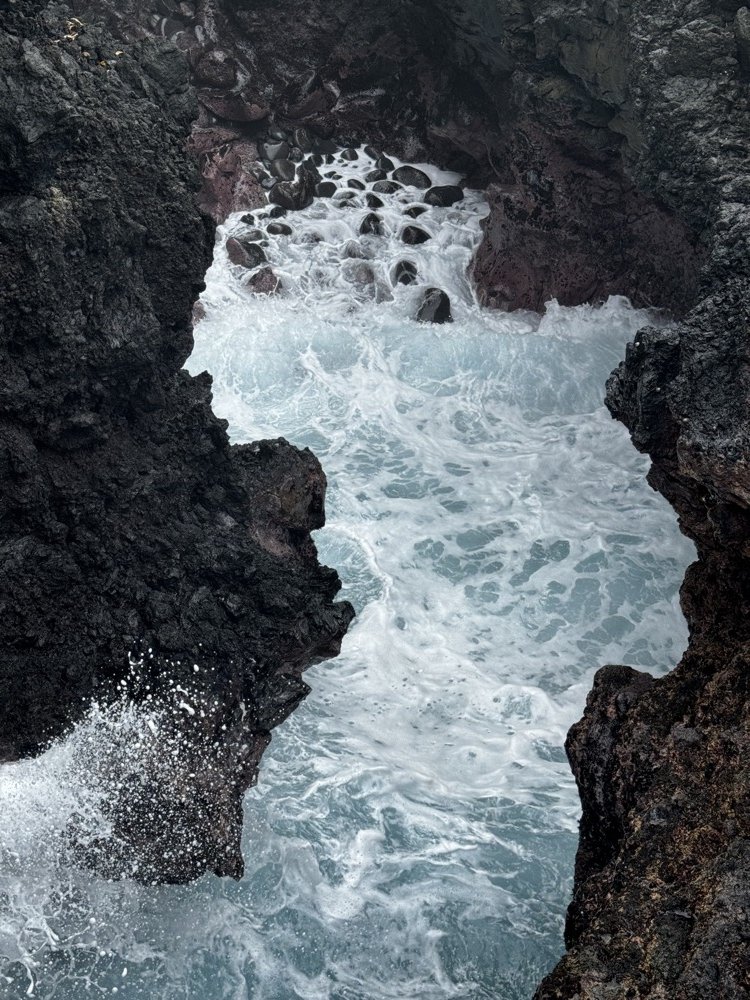
Coastal Surf in Maui, Hawaii. Photo by Sam Julian
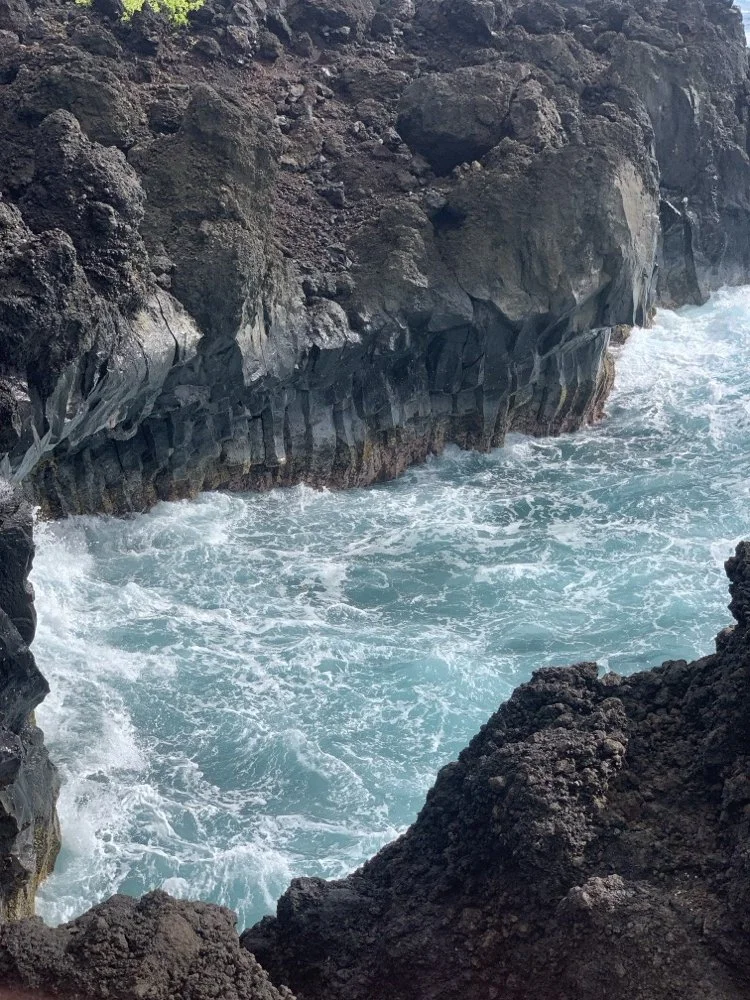
Coastal Surf in Maui, Hawaii. Photo by Sam Julian
Octopuses are known to hunt for food in these liminal spaces. It's not difficult to imagine an octopus trapped in a maze of constantly shifting water channels, at dual risk of desiccating in the air or being pummeled by the surge against sharp volcanic rock.
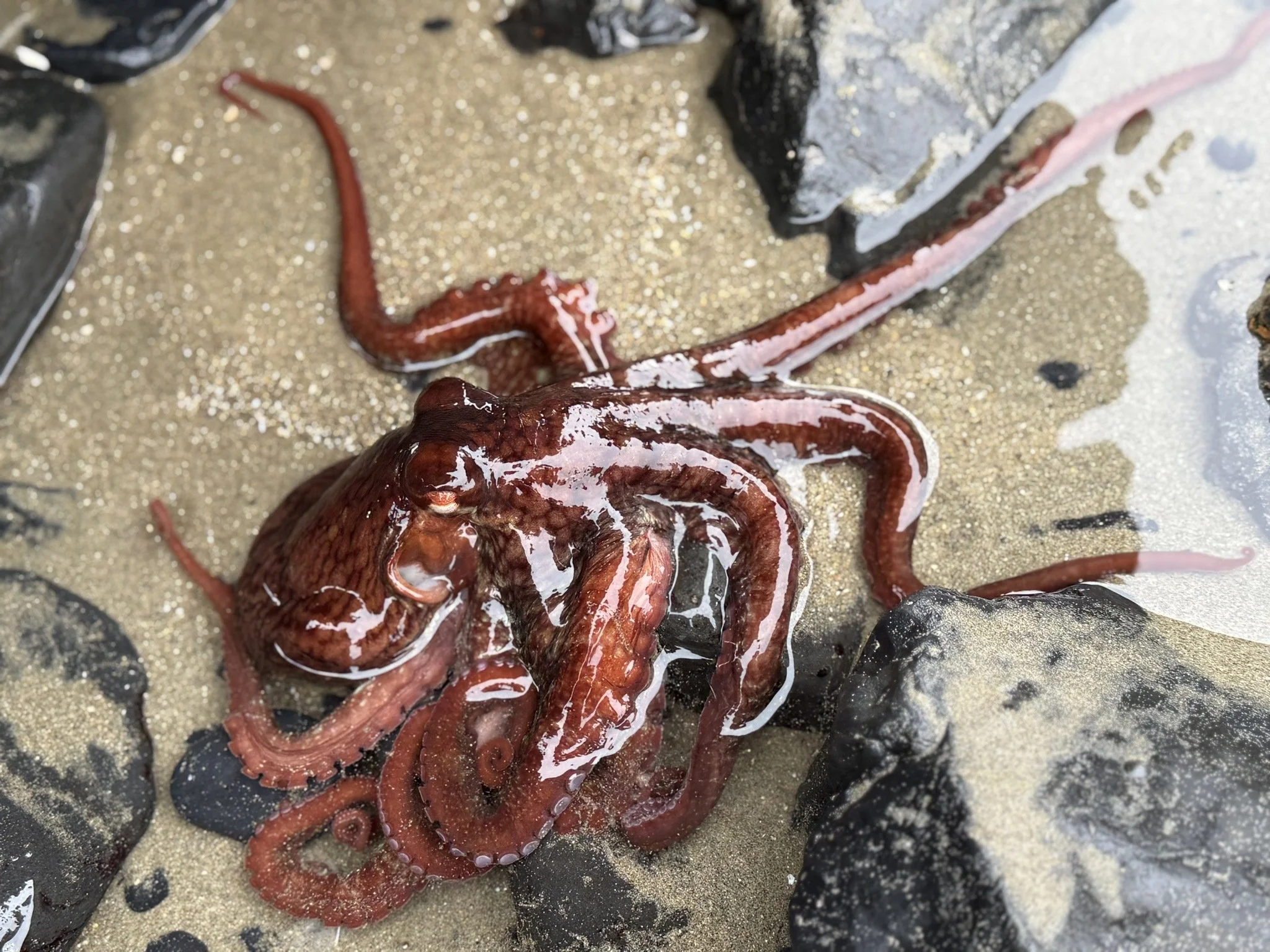
East Pacfic Red Octopus photo by Castle
The Tide Pool is in many ways the perfect metaphor for the Trial of the Hanged Man, because it represents the risk, danger and discomfort that must be overcome to achieve ones goals.
Despite appearing inhospitable, tide pools are in fact home to a host of plant and animal life drawn by the abundance of nutrients. These crashing waves bring a constant infusion nutrient-rich water, so the source of stress is also the source of the ecosystem's material abundance. So too can our most difficult trials lead to proportionally rewarding results.
Mussels in Pismo Beach. Photo by Sarah Guerrero
Sea Anemones in Pismo Beach. Photo by Sarah Guerrero
Sea Anemone in Pismo Beach. Photo by Sarah Guerrero
Mussels in Pismo Beach. Photo by Sarah Guerrero
A variety of extremophiles who have adapted to thrive in the tide pool environment. Mussels and barnacles are sedentary animals that have developed hard shells to survive periods of exposure. Anemones extend their tentacles when wet, and retract when exposed. Chitons, sea stars, limpets, snails, abalone, even non animal life like algae have all developed adaptations to keep a low profile and survive the buffeting of the waves and reap the benefits of the tide pool. Tidal fish like the sculpin and crustaceans like kelp and rock crabs find safe crevices to wedge themselves in and stay protected from the current. The pacific spiny lumpsucker is a particularly unique fish that's developed specialized fins that create a suction on their ventral side to avoid being blown away. You can find all of these animals depicted in The Anchored.
Hook or Anchor?
Over the course of the illustration, the Hook became an Anchor, which I think ultimately fits the theme of the card better. As we've seen, the Hanged Man is a cooperative participant in their trial. A hook implies a lack of agency, a trapped individual caught in systems outside their control. An anchor, on the other hand, is a hook but with a shift in perspective. The Anchor belongs to the Anchored. If you have an anchor you'll remain latched to your target. Even in the face of environmental stressors you can stay focused on your goal, and secure in where you need to be.
Artist’s Notes
I live on the North American Pacific coast, so tide pools have been a staple of my life and exposure to the natural world. I have a lot of photos from personal experiences, so I drew on them for this piece. You can find these specific anemones, kelp crabs and sea stars in the art of the card.
Sea Star in Pismo Beach. Photo by Sarah Guerrero
Crab and Sea Anemone in a Tide Pools in Northern California. Photo by Sam Julian
While was working on this piece I was lucky enough to visit the California Academy of Sciences on a day when their resident giant Pacific octopus (Linguini) was feeling particularly active and playful. I watched her move about the tank for over an hour, mesmerized, and during that time they occasionally would play in the circulation pump, latching on to the wall and feeling the water current push some of their arms and webbing back. It genuinely reminded me of the positive feeling I get when I put my hand out the window of a moving car, or feel a strong breeze at the top of the hill. I felt I empathized with the octopus in those moments.
This was another piece that took longer because I 'overdrew' it. I wanted to fit all these different tide pool animals into the piece, and I drew them all. But then I wanted to instill the sense of the crashing waves, so I spent time drawing shifting rushing waves and seafoam on top of them. But this semi-transparency and foam occluded the shape of the octopus and all the sea life I'd spent so much time on, and made the piece seem even busier.
Ultimately the complexity was inconsistent with the style of my other cards and inappropriate for a small card size, though perhaps it is appropriate for the full poster. I briefly considered throwing out the tide pool life entirely and just drawing the octopus fighting the rushing waves, but I couldn't bear to remove the animal representations of the metaphor I had developed.
The final version I've gone with is a depiction of the water clear, and the strength of the current only implied by the position of the octopus's arms and webbing.
Let me know which version you like yourself! I am curious to know.